





 Sold out
Vident
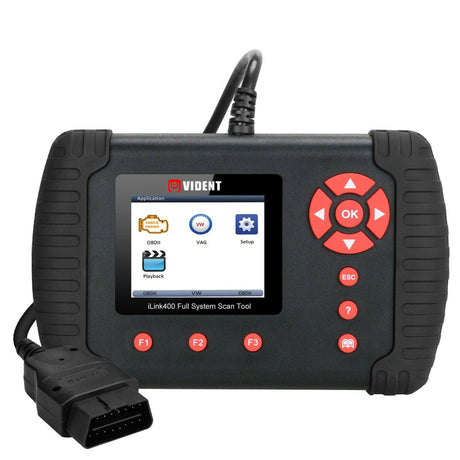
Vident iLink400 Porsche Professional Vehicle Diagnostic Device Full System Scan
23900 €Unit price /Unavailable Sold out
Vident
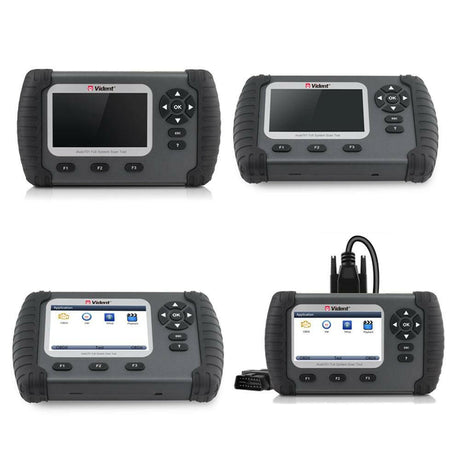
Vident iAuto 701 Porsche Professional Vehicle Diagnostic Device Full System Single Brands
23900 €Unit price /Unavailable
Further information
Advantages of vehicle diagnostic devices for different vehicle types
Advantages of vehicle diagnostic devices for different vehicle types
Vehicle diagnostic devices are essential for the maintenance and repair of all types of vehicles, be it cars , trucks or motorcycles . These devices enable the reading and deletion of error codes generated by the vehicle's control units using the error readers. With a high-quality vehicle diagnostic device, workshops and private users can quickly and precisely identify and resolve the cause of problems. Thanks to the comprehensive diagnostic options and the ability to program control units , professional diagnostic devices are indispensable tools for every workshop. Regular use of these devices extends the service life of the vehicle and increases operational reliability.
How professional diagnostic devices are revolutionizing vehicle maintenance
How professional diagnostic devices are revolutionizing vehicle maintenance
Professional diagnostic devices offer far more functions than simple OBD readers. They not only allow you to read and delete error codes with the error readers , but also to carry out live data tests and actuator tests. They also offer advanced functions such as calibrating control units and adjusting comfort functions. In today's world, where vehicles are becoming increasingly complex, such comprehensive diagnostic options are invaluable. With a professional diagnostic device, workshops can ensure that they are able to carry out even the most demanding repairs and maintenance work efficiently and precisely.
The role of OBD diagnostic devices in modern vehicle diagnostics
The role of OBD diagnostic devices in modern vehicle diagnostics
OBD diagnostic devices are standardized tools used in almost every modern vehicle. They allow you to read engine and emissions data and monitor various vehicle systems. With an OBD diagnostic device, potential problems can be identified early and resolved before they lead to major damage. These devices are of great use not only to workshops but also to vehicle owners. They offer an easy way to monitor the condition of the vehicle and carry out necessary maintenance work in a timely manner. Car diagnostics become more efficient and effective with OBD diagnostic devices.
Car diagnostics: key to long-term vehicle health
Car diagnostics: key to long-term vehicle health
Car diagnostics play a crucial role in the long-term health and performance of a vehicle. By using modern diagnostic devices, mechanics and vehicle owners can make precise diagnoses and carry out targeted repairs. This saves time and money and helps extend the life of the vehicle. Modern car diagnostics not only include reading error codes with the error readers , but also analyzing live data, carrying out special tests and adjusting control units. With a reliable diagnostic device, you always have all the important information at hand to optimally maintain and repair your vehicle.
Buy a Porsche diagnostic tool – fault code reader & coding
A Porsche diagnostic tool is the foundation for precise maintenance, reproducible fault analysis, and – depending on the model series – selected coding at a workshop level. Unlike simple OBD2 readers, professional systems access brand-specific control units, interpret Porsche-specific communication protocols, and reliably execute guided service procedures. At Auto-Diagnostik.de, you'll find field-tested solutions such as the Vident iLink400 (Porsche via brand activation) and the Vident iAuto701 (included in Porsche models from the factory). For newer platforms with DoIP (Diagnostics over Internet Protocol), such as the Taycan, we assist with device and model-specific classification, ensuring you know exactly which functions are available for your specific application before you purchase.
Brand-specific diagnostics instead of generic OBD2
Modern Porsche models are highly networked systems with dozens of control units. A generic OBD2 scanner can only read emissions-related fault codes from the engine control unit – the other domains remain untouched. A Porsche-specific OBD reader, on the other hand, opens the door to chassis, comfort, safety, and driver assistance systems, displays live data in informative channels, triggers guided service routines, and allows – within legal limits – adjustments and coding. The crucial factor is not the number of menus, but the quality of their implementation : stable communication, reliable data points, clear feedback, and traceable logging.
Functional range of a Porsche diagnostic device
A reputable Porsche diagnostic tool should cover the following core areas – depending on the model and its condition. It is important that the implementation is consistent and that the user interface does not devolve into unclear abbreviations and cryptic status messages.
- Drive/ECU : Read/delete fault memory, freeze frames, live data (boost pressure, lambdas, ignition angle, high-pressure/low-pressure fuel systems), adaptation values.
- Transmission (Tiptronic/PDK): Fault codes, oil temperatures, clutch values, adaptation/learning functions, basic settings where provided.
- Chassis : PASM , possibly level control and rear axle steering; condition monitoring of sensors and actuators.
- Stability & Brakes : PSM/ABS diagnostics, wheel speeds, valve tests; EPB service (electronic parking brake) including resets.
- Tire pressure monitoring system (TPMS) : Identify sensor IDs, teach in according to manufacturer specifications, and verify status and pressure values.
- Battery/Energy : BMS parameters, battery registration and learning (especially relevant for start-stop/AGM), quiescent current indicators.
- Airbag/SRS : Check actuator/ignition circuits, handle resettable events within the framework of the specifications; observe strict safety rules.
- Body/Comfort : BCM, power windows, seat modules, climate control, light signatures; make model-specific adjustments with care.
- Assistance systems : ACC, lane/lane change assistants, surround view cameras; robust diagnostics and calibration-related data points, where released.
- Service functions : Oil/inspection resets, throttle valve adaptation, steering angle sensor calibration, maintenance interval maintenance.
Protocols & Networks in Porsche Vehicles
Depending on the model series and year, Porsche uses a mix of UDS , CAN/LIN , MOST (for infotainment systems), and, in newer generations , DoIP . For diagnostic tools, this means they must reliably manage multiple communication layers and remain stable when switching between domains. DoIP supplements classic CAN diagnostics with TCP/IP-based access, resulting in varying bandwidth and access patterns. A device that operates inconsistently here will deliver incomplete lists, interrupted routines, or contradictory live data – unacceptable in practical workshop settings.
Vident iLink400 – Porsche Focus with brand unlock
Vident iLink400 is designed for users who want in-depth support for Porsches without the unnecessary complexity of multi-brand systems. After brand activation, comprehensive access to core systems is available, depending on the model. The focus is particularly compelling: menus are clearly structured, the path from troubleshooting to corrective action remains logical, and live data is sensibly pre-sorted. This concentration offers a practical advantage for workshops that regularly service Porsches and for ambitious private owners – it reduces search times and prevents misinterpretations.
In everyday use, the iLink400 proves its worth during service work (oil changes/inspections, EPB service, throttle body), battery- related issues (BMS, registration), and moderate comfort adjustments . Coding, as always, depends on the model and function; the rule here is: only implement what is technically approved and legally permissible. Updates for the activated brand are typically included, making the investment predictable. The robust hardware with a color display is designed for workshop conditions and deliberately avoids distractions.
Vident iAuto701 – Multi-brand with Porsche on board
The Vident iAuto701 is the pragmatic choice for independent workshops that diagnose Porsches but also service many other makes on a daily basis. Porsche functionality is included out of the box, eliminating the need for additional activation. The device is essentially a general-purpose tool – and that's not a disadvantage, provided the implementation is correct. In practice, it proves its worth with stable, comprehensive scans, clearly structured live data including graphical representation, and the usual service functions from oil changes/inspections to EPB and BMS.
Where the iAuto701 truly shines is in its seamless switching capabilities : from Porsche to another make, without any system disruption. This significantly reduces friction, especially in multi-brand businesses. However, a balanced approach remains crucial: those who exclusively service Porsche vehicles at a high level of detail will generally benefit from the focused iLink400; those who mix brands daily will find the iAuto701 more efficient – while still maintaining reliable coverage in all practical areas when working with Porsche.
DoIP & E-/Hybrid series
With DoIP, TCP/IP-based diagnostic methods are becoming increasingly common – particularly relevant for Porsche's electric platforms like the Taycan . This has consequences: diagnostic devices must handle network configurations reliably, execute session transitions smoothly, and maintain tight fault tolerances. In practice, this means clarifying in advance which specific functions are required (e.g., fault memory, certain service routines, high-voltage diagnostics) and whether the respective device software supports them in the relevant model series. A reputable approach is to transparently define limitations rather than making blanket promises of complete coverage.
Regardless of the device, high-voltage systems require qualifications, equipment, and procedures. A diagnostic tool can provide data, but the safe and responsible actions remain with trained personnel. Those who provide structured support for electric vehicles benefit from clear checklists, documented procedures, and well-maintained equipment management (firmware versions, cables, adapters, stable power supply).
Compatibility across model series
Diagnostic coverage varies depending on the model, trim level, and software version. For an overview, the classification by model series is helpful:
- 911 (997/991/992) : solid coverage in drive/PDK, chassis (PASM/PSM), comfort and SRS; model-dependent, useful adjustments available.
- Boxster/Cayman (987/981/982) : ECU/PDK access, TPMS, BMS, comfort modules; structured live data facilitates root cause analysis.
- Cayenne (9PA/92A/9YA) : Complex domain positions with air suspension, EPB, extensive BCM; reliable diagnostics require stable communication.
- Macan (95B) : Broad coverage of core systems; clear service routines accelerate maintenance processes in multi-brand operations.
- Panamera (970/971) : Focus on drive/PDK, assistance systems (depending on equipment) and comfort; BMS maintenance essential.
- Taycan (J1) : DoIP-based; functionality always depends on device and software version, to be specified in advance.
This outline does not replace an individual case review. Those who work systematically will identify the required functional blocks in advance, compare them with the product description, and finalize the appropriate configuration – if necessary, with our consultation.
Practical scenarios: From observation to robust action
Effective Porsche diagnostics involve more than simply reading an error code. The crucial element is translating that code into reproducible steps:
- Service & Maintenance : Oil and inspection reset with documentation, throttle valve adaptation after cleaning, EPB service with brake work steps.
- Battery management : Battery registration upon replacement, interpretation of BMS parameters, narrowing down suspected quiescent current via live data.
- Chassis & Tires : Check PASM status, verify sensor errors, identify and start up TPMS sensors.
- Comfort & Body : BCM deviations correlate with symptom-related live channels; only set approved adjustments.
- Fault analysis : Compare live data graphically, capture intermittent faults over longer measurement windows, and use targeted actuator tests.
Buying advice: Selection criteria without detours
The decision between iLink400 and iAuto701 is not made on a whim, but according to clear criteria:
- Application profile : Porsche focus (iLink400) vs. multi-brand everyday use (iAuto701).
- Functional requirements : Service, live data, selected encodings – define them specifically instead of “as much as possible”.
- Model series focus : Classic combustion engines vs. electric/hybrid (DoIP relevance). Compare feature lists.
- Process maturity : Do you need graphical recording, export, reporting logic? Then check the software details.
- Update path : Regular updates are not a luxury, but rather maintenance of the diagnostic base.
- Proximity to support : A competent contact person saves actual workshop time – and therefore money.
Common sources of error and how to avoid them
Diagnostic errors rarely arise from "the device itself," but rather from external factors. Three everyday examples:
Unstable power supply: A weak vehicle or on-board power supply leads to communication interruptions. Remedy: Ensure a stable power supply, use a charger with a suitable charging curve, especially during long sessions or programming.
Unclear functional requirements: Anyone expecting "everything" will be disappointed – not every control unit allows unrestricted intervention. Solution: Define in advance exactly what is needed (e.g., EPB service, BMS registration, specific data channels), then configure it accordingly.
Outdated software versions: Older device versions deliver implausible data or fail to recognize new control units. Solution: Install updates consistently, read changelogs, and contact support if you encounter any discrepancies.
Security & Compliance
Work on brakes, airbags, and high-voltage systems is safety-critical . Adherence to manufacturer specifications, the use of appropriate protective equipment, and the qualifications of personnel are non-negotiable. The same applies to coding: not everything that seems technically possible is permissible or advisable. A reputable company documents changes, checks fallback paths, and informs the customer transparently.
Accessories & Ecosystem
Diagnostics become efficient when the ecosystem is right. TPMS tools accelerate sensor replacement and relearning processes. Battery testers provide hard data on internal resistance, CCA, and state of charge – indispensable for electrical issues. OBD adapter cables and robust extension cords prevent contact problems, especially with older connectors or in confined spaces. Regular testing also ensures a clean measurement culture : defined test sequences, reproducible conditions, and clear measurement protocols.
Process: From order to initial commissioning
A structured process reduces false starts. After selecting the device, the scope of delivery and software versions are verified. For the iLink400, this is followed by brand activation for Porsche, and for the iAuto701, the first baseline update check . In the workshop, a short dry run is performed on a reference vehicle: establishing a connection, loading the control unit tree, displaying sample live data, and simulating a service function (without making any actual changes). The local standards are then documented (e.g., naming scheme for vehicle sessions, storage location of exports, responsibilities for updates). Only then is the system deployed to a customer.
Long-term use: Maintenance beats improvisation
A diagnostic tool is not a disposable item, but a vital component of the workshop's IT infrastructure. Treating it like a torque wrench – regularly checked, kept clean, and clearly assigned – results in fewer breakdowns. This includes:
- Regular updates of the device software and databases.
- Version documentation : Which cases were processed with which software version?
- Cable maintenance : visual inspection, strain relief, keep replacements on hand.
- Voltage management : Ensure that power supplies/chargers are of suitable quality.
- Training : short internal refresher courses when new features are introduced.
The result is a robust diagnostic chain: from the first symptom through data collection to a clear decision template – comprehensible and repeatable.
Next step: Define requirements and select device
Anyone who systematically services Porsches needs a diagnostic tool that not only promises a lot but reliably delivers the relevant information . The Vident iLink400 is recommended when Porsche is the clear focus and focused, in-depth coverage is required. The Vident iAuto701 is the efficient choice for workshops with a mix of brands that still want to provide high-quality Porsche diagnostics. In both cases, the winners are those who clearly define their functional requirements, take updates seriously, and document their work steps thoroughly. This transforms a fault code reader into a productive tool that saves time, reduces risks, and provides sound decision-making – exactly what high-quality Porsche diagnostics must deliver today.