






Autel
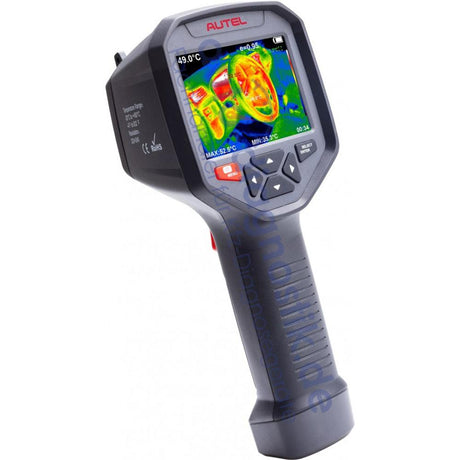
Autel IR100 Thermal Camera for Automotive Diagnostics and Precise Temperature Analysis
1.09900 €Unit price /Unavailable
Further information
Advantages of vehicle diagnostic devices for different vehicle types
Advantages of vehicle diagnostic devices for different vehicle types
Vehicle diagnostic devices are essential for the maintenance and repair of all types of vehicles, be it cars , trucks or motorcycles . These devices enable the reading and deletion of error codes generated by the vehicle's control units using the error readers. With a high-quality vehicle diagnostic device, workshops and private users can quickly and precisely identify and resolve the cause of problems. Thanks to the comprehensive diagnostic options and the ability to program control units , professional diagnostic devices are indispensable tools for every workshop. Regular use of these devices extends the service life of the vehicle and increases operational reliability.
How professional diagnostic devices are revolutionizing vehicle maintenance
How professional diagnostic devices are revolutionizing vehicle maintenance
Professional diagnostic devices offer far more functions than simple OBD readers. They not only allow you to read and delete error codes with the error readers , but also to carry out live data tests and actuator tests. They also offer advanced functions such as calibrating control units and adjusting comfort functions. In today's world, where vehicles are becoming increasingly complex, such comprehensive diagnostic options are invaluable. With a professional diagnostic device, workshops can ensure that they are able to carry out even the most demanding repairs and maintenance work efficiently and precisely.
The role of OBD diagnostic devices in modern vehicle diagnostics
The role of OBD diagnostic devices in modern vehicle diagnostics
OBD diagnostic devices are standardized tools used in almost every modern vehicle. They allow you to read engine and emissions data and monitor various vehicle systems. With an OBD diagnostic device, potential problems can be identified early and resolved before they lead to major damage. These devices are of great use not only to workshops but also to vehicle owners. They offer an easy way to monitor the condition of the vehicle and carry out necessary maintenance work in a timely manner. Car diagnostics become more efficient and effective with OBD diagnostic devices.
Car diagnostics: key to long-term vehicle health
Car diagnostics: key to long-term vehicle health
Car diagnostics play a crucial role in the long-term health and performance of a vehicle. By using modern diagnostic devices, mechanics and vehicle owners can make precise diagnoses and carry out targeted repairs. This saves time and money and helps extend the life of the vehicle. Modern car diagnostics not only include reading error codes with the error readers , but also analyzing live data, carrying out special tests and adjusting control units. With a reliable diagnostic device, you always have all the important information at hand to optimally maintain and repair your vehicle.
Endoscope camera for cars – Perfect view into the engine compartment
An endoscope camera has become indispensable in modern vehicle diagnostics. It allows for detailed views into hard-to-reach areas without the need to dismantle major components. Whether it's the intake manifold, cylinder head, turbocharger, or valves – an endoscope camera makes even hidden areas visible that are inaccessible to the naked eye. Especially with modern, highly compact engines, it is an essential tool for precise work. At the same time, it reduces the risk of removing unnecessary parts or causing damage through blind interventions. Thus, the endoscope camera directly contributes to shortening diagnostic times, reducing costs, and significantly improving the quality of repairs.
Why an endoscope camera is indispensable in the automotive sector
The technology used in vehicle manufacturing is becoming increasingly complex, and components are positioned ever closer together. As a result, many areas in the engine compartment, on the exhaust system, or behind trim panels are barely accessible using conventional methods. This is precisely where the endoscope camera demonstrates its strengths, providing access to tight spaces and concealed components without the need for major disassembly. This not only saves time but also reduces the risk of unnecessarily loosening or damaging functional components. At the same time, the optical inspection provides crucial additional information that goes far beyond mere measurements – such as surface condition, deposits, or mechanical damage. For workshops and ambitious mechanics, an endoscope camera is therefore an essential tool for safely and efficiently diagnosing modern vehicles.
Access to hard-to-reach places
Typical problem areas such as turbochargers, valve seats, combustion chambers, EGR channels, or narrow air passages are often difficult to access with conventional tools. A flexible endoscope camera with a slim camera head penetrates precisely into these areas, enabling targeted visual inspection without the need to remove large assemblies. This allows for the visual assessment of piston crowns, valve stems, or sealing surfaces before considering a complex disassembly. The camera can also help pinpoint the location of foreign objects suspected in the intake tract or cylinder. This not only reduces labor time but also avoids unnecessary risks during disassembly. This gentle access is a major advantage, especially for high-quality or hard-to-find engines.
Time savings in troubleshooting
Instead of removing components on suspicion, the endoscope camera provides immediate visual indications of the actual internal condition. Cracks, deposits, oil leaks, leaks, or material wear can be seen directly on the display and often clearly attributed to a specific component. This makes troubleshooting significantly more structured and targeted, as hypotheses can be quickly verified. Repeated assembly and disassembly work, which is time-consuming and carries additional risks, can often be avoided. The endoscope camera quickly pays for itself, especially with hard-to-reach components, such as those in the exhaust system or the interior. Ultimately, not only the workshop but also the customer benefits from shorter downtimes and transparent findings.
Less work, more targeted repairs
Visual inspection with an endoscope camera allows for significantly better repair preparation. Even before disassembly, the mechanic knows which components are affected and which parts will likely need replacing. This enables more precise planning and organization of tools, spare parts, and workflows in advance. This not only reduces labor time but also minimizes the risk of encountering unexpected problems during the repair. Simultaneously, the success rate of troubleshooting increases because less repair work is done "on suspicion." For workshops with tightly scheduled processes and high throughput, this planning certainty represents a clear productivity advantage. The endoscope camera also facilitates well-informed decisions in mobile service and used car appraisals.
The advantages of an endoscope camera for mobile phones
An endoscope camera for smartphones combines professional imaging technology with maximum mobility and ease of use. It typically connects to your smartphone via USB-C, Lightning, or Wi-Fi, making it quick and easy to use. A dedicated app allows you to view the camera's live image, zoom in, take photos, or save videos. This makes it particularly appealing for mobile applications, hobby mechanics, or workshops that value flexible diagnostic tools. At the same time, you eliminate the need for a separate display device, as your smartphone acts as the monitor. The result is a lightweight, compact, and versatile system that is easy to transport and use on the go.
Compact design – Big impact
Despite their small size, modern smartphone endoscopes deliver surprisingly sharp and detailed images. Many models offer at least HD or Full HD resolution, while high-end versions even reach 2K or 4K. This makes even the smallest details, such as hairline cracks, corrosion, or fine deposits, clearly visible. The compact design also makes it easier to guide the camera through narrow openings, such as spark plug holes or small service openings in the interior. At the same time, the system remains light enough for fatigue-free use over extended periods. For precise diagnostics in the engine compartment, on the exhaust system, or behind trim panels, the combination of compact design and high image quality is a decisive advantage.
Integrated lighting for optimal visibility
Many endoscope cameras feature multiple LEDs mounted directly at the camera tip, which illuminate the work area evenly. This allows for good visibility even in completely dark areas, such as inside cylinder heads, air ducts, or behind panels. High-quality devices offer stepless brightness adjustment to prevent reflections and improve detail recognition. This allows the illumination to be precisely tailored to the material, distance, and surface texture. This is a significant advantage over simple, non-dimmable lights, especially when working with metallic surfaces or shiny deposits. Overall, the integrated lighting contributes significantly to professional image quality and, consequently, to reliable diagnoses.
Documentation made easy
The combination of an endoscope camera and a smartphone makes documentation particularly easy. Photos and videos can be captured directly during inspections and stored in the device's memory or in the cloud. Workshops can thus document their findings in service reports or clearly explain to customers why certain repairs are necessary. Image and video recording is also very helpful for training purposes, internal quality control, and expert reports. The files can also be quickly shared via email, messenger, or customer portal. This makes the endoscope camera not only a diagnostic tool but also an important component for transparent communication and professional documentation.
Typical application areas in the automotive sector
The applications of an endoscope camera in a car are extremely versatile, ranging from the engine and exhaust system to the interior. Wherever direct vision is impossible or only achievable with great difficulty, the camera provides clarity. It is particularly helpful with hard-to-reach components, allowing for the quick identification of hidden damage such as cracks, leaks, or deposits. This significantly speeds up the troubleshooting process for malfunctions. The endoscope camera also offers valuable insights for assessing the condition of used vehicles or preparing for major repairs. Therefore, it is a universally applicable diagnostic tool for workshops and discerning private users alike.
Inspect cylinders and valves
An endoscope camera allows for inspection of the combustion chamber without removing the cylinder head. The camera head can be inserted directly into the cylinder through the spark plug hole or special openings. This reveals combustion residues, carbon deposits, piston deposits, and mechanical damage that would otherwise only be detectable after extensive disassembly. The condition of the valve heads and valve seats can also be better assessed. This enables a well-informed decision as to whether cleaning, repair, or a complete engine rebuild is advisable. In this way, unnecessary work can be avoided, and hidden damage can be detected early.
Check exhaust system and catalytic converter
In complex exhaust systems, such as those with EGR valves, particulate filters, and catalytic converters, deposits are a common cause of error messages and loss of performance. An endoscope camera allows for direct inspection of these areas without having to remove the entire system. This makes it possible to check, for example, whether channels are clogged, cracks have formed, or the catalytic converter has structural damage. Inspecting welds, pipe joints, and clamps is also possible to locate leaks. This saves time and avoids costly disassembly of exhaust components. At the same time, you gain a reliable basis for deciding whether cleaning, repair, or replacement is necessary.
Causes of malfunctions in air conditioning or heating systems
Blocked air ducts, loose flaps, or jammed actuators in climate control and heating systems are often difficult to locate because they are hidden deep within the dashboard. An endoscope camera can be inserted into these areas through ventilation slots, service openings, or removed trim panels. This allows for the quick identification of foreign objects, defective mechanisms, or broken plastic parts. Noise sources, such as rattling flaps or rubbing components, can also be visually located. This reduces the need to dismantle large parts of the interior and lowers the risk of damage to trim panels. For workshops, this translates to less labor time, and for customers, often lower repair costs.
Check cables and electronics
Loose connectors, damaged cable insulation, or corroded contacts are among the most common causes of electrical problems in vehicles. These areas are often difficult to access, particularly in the engine compartment, rocker panel area, or behind the dashboard. With an endoscope camera, you can precisely inspect wiring harnesses, connector strips, and fuse boxes without having to remove large trim panels. This reveals chafing, moisture damage, or broken locking tabs that are barely visible to the naked eye. Combined with electrical measurements, this allows you to pinpoint the source of the problem much faster. The result is shorter diagnostic times and fewer unnecessary parts replacements.
Difference to a thermal imaging camera or infrared camera
An endoscope camera and a thermal imaging camera (infrared camera) employ different approaches, but complement each other perfectly in vehicle diagnostics. While the endoscope camera enables a visual inspection of interiors and concealed areas, the thermal imaging camera focuses on measuring surface temperatures. Infrared technology can thus reveal, for example, overheated bearings, uneven brakes, or thermal anomalies in the engine management system. The endoscope camera, on the other hand, shows you the specific mechanical or structural cause behind an issue. Combined, they provide a very comprehensive picture of a vehicle's technical condition. For professional workshops, both systems are therefore a valuable addition to their diagnostic toolkit.
Visual inspection vs. temperature diagnosis
The endoscope camera allows for direct visual inspection of cavities, channels, and component surfaces, such as in cylinders, intake manifolds, or exhaust gas recirculation systems. Physical damage, deposits, or foreign objects are immediately visible in the camera image. In contrast, the thermal imaging camera operates without contact and displays temperature distributions on surfaces. This makes it possible to visualize, for example, overloaded components, unevenly functioning brakes, or electrical contact resistances. Both methods thus provide different but complementary information. In practice, it is often useful to first locate thermal anomalies and then use the endoscope camera to specifically search for the mechanical cause.
Additional tools for professionals
The combination of an endoscope camera and a thermal imaging camera creates a highly detailed overall image of the vehicle. Visible and invisible sources of faults can thus be pinpointed much more precisely than with a single tool. Workshops using both systems can make diagnoses faster, provide more thorough explanations, and communicate them more effectively to customers. This improves both the technical quality of the work and the transparency of the service process. This combination is particularly beneficial for complex problems involving multiple systems. Simple fault finding is transformed into a structured, data-driven analysis, which is becoming increasingly important in professional settings.
Ideal for diagnostics, maintenance and repair
Whether for routine maintenance, targeted troubleshooting, or vehicle condition assessment, endoscope cameras and thermal imaging cameras are invaluable tools. They enable predictive maintenance by allowing weaknesses to be detected early, before a breakdown occurs. This is particularly beneficial for fleet operators, businesses, and frequent users, where downtime directly translates into costly expenses. Private vehicle owners also benefit from a more accurate assessment of their vehicles' technical condition. Combining both camera types effectively significantly enhances diagnostic capabilities, ensuring workshop equipment meets the demands of modern automotive technology.
What should you look out for when buying an endoscope camera for your car?
Not every endoscope camera is equally suitable for automotive use. Differences exist primarily in image quality, cable length, flexibility, lighting, and compatibility with existing devices. Before purchasing, you should therefore carefully consider where you primarily intend to use the camera and what requirements this entails. For the engine compartment, you often need a slim, flexible cable, while a slightly larger diameter is sometimes acceptable for the interior. The question of whether you prefer to work with a smartphone or a separate monitor also plays a role. A conscious selection ensures that the camera truly suits your daily work style and doesn't end up unused in a drawer.
Compatibility with your smartphone
If you want to use an endoscope camera with your smartphone, compatibility with your device is crucial. Check whether the camera supports the necessary interfaces, such as USB-C, Lightning, or Wi-Fi, and whether the accompanying app is compatible with your operating system (Android or iOS). Ideally, the manufacturer offers stable, regularly updated software that ensures smooth image transmission and ease of use. Some cameras can also be connected to a PC or tablet, which is particularly useful for workshops with established IT infrastructure. Also, consider whether drivers or additional software are required, or if the solution is "plug and play." The better the integration with your existing technology, the more frequently and efficiently you will be able to use the camera.
Cable length and flexibility
Cable length is a crucial factor for the practicality of an endoscope camera in a vehicle. For most applications in the engine compartment, lengths between 1 and 3 meters are sufficient; in special cases, a longer cable may be useful. It's important that the cable is flexible yet rigid, allowing you to guide it precisely without it constantly kinking or springing back. A cable that is too soft is difficult to control, while one that is too stiff can cause obstructions in tight spaces. Some models also offer small guides or bending tools to better position the camera head. Therefore, consider beforehand which areas you will need to access most frequently and choose the cable length accordingly.
Resolution and image quality
High resolution is crucial for reliably detecting fine details such as hairline cracks, corrosion, grinding marks, or fine deposits. As a minimum standard, an endoscope camera should offer HD resolution today; Full HD or higher is preferable. However, in addition to the sheer number of pixels, image processing also plays a role, including the sensor's light sensitivity and contrast rendering. A good camera delivers a clear, smooth image that remains easily readable even when the camera head is moved. Therefore, pay attention to specifications regarding the frame rate and to practical user reviews. Especially during longer diagnostic sessions, high-quality image quality pays off in terms of reduced eye strain and faster diagnosis.
LED lighting and waterproofing
At least six integrated LEDs at the camera's tip have become a practical standard for reliably illuminating tight and dark areas inside a vehicle. Models with dimmable brightness are even more convenient, allowing you to adjust the light to the surroundings and materials. Waterproofing is equally important, typically indicated by protection classes such as IP67. This allows you to use the camera in damp, oily, or slightly dirty areas without fear of damage. This is a crucial safety factor, especially in the engine compartment or underbody. Combined with a robust design, this ensures that the camera will operate reliably for a long time, even in the demanding environment of a workshop.
Ideal for workshops and ambitious hobby mechanics
The endoscope camera is an extremely useful tool for both professional workshops and dedicated DIY mechanics. Workshops benefit from faster fault location, better repair planning, and professional documentation for customers. DIY mechanics gain an affordable instrument that allows them to assess their vehicles much more thoroughly than would be possible with simple testing equipment. Whether it's leaks, deposits, mechanical damage, or hard-to-reach screws – the camera provides crucial information in many situations. This helps avoid unnecessary disassembly and allows for more targeted repair planning. The purchase often pays for itself after just a few uses.
Combination with diagnostic devices
The endoscope camera doesn't replace an OBD2 diagnostic tool, but rather complements it effectively. While the diagnostic tool provides error codes and reports electronic anomalies, the camera reveals the corresponding mechanical causes. For example, you can better diagnose misfires by visually inspecting the spark plug, combustion chamber, or fuel injector. Power loss can be assessed in more detail by examining the EGR valve, charge air system, or turbocharger. The camera also helps pinpoint the source of oil or coolant leaks without requiring the removal of large components. The combination results in a significantly more precise diagnosis, saving time and increasing the success rate of repairs.
Endoscope camera with screen – an alternative to a smartphone
For those who want to work independently of their smartphone or are looking for a particularly robust solution for workshop use, an endoscope camera with its own screen is the ideal choice. These devices are generally designed as complete systems and offer an integrated monitor that is easily readable even in poor lighting conditions. Operation is usually via physical buttons or a simple menu, making the device easy to use even with gloves. Many models have an SD card slot for storing images and videos, as well as various camera heads or interchangeable probes. For daily use in the workshop, such a stand-alone solution is often more convenient because no additional device needs to be connected. This independence from a personal smartphone is particularly beneficial with intensive use or multiple users in the workshop.
Recommendation: Autel MaxiIRT IR100 thermal imaging camera as an ideal complement
For particularly precise and comprehensive vehicle diagnostics, we recommend the Autel MaxiIRT IR100 thermal imaging camera . This device perfectly complements the endoscope camera, as it reveals thermal anomalies that would be undetectable with a conventional visual inspection alone. The combination of high-resolution thermal imaging and rapid temperature measurement allows for the reliable identification of problems such as overheating, electrical resistance, or uneven temperature profiles along the exhaust system. The Autel MaxiIRT IR100 is compact, robust, and specifically designed for daily workshop use – ideal for mechanics, diagnostic technicians, and discerning DIY enthusiasts. The ability to analyze temperature differences in real time is particularly helpful, enabling the rapid assessment of critical components such as bearings, sensors, turbochargers, or battery components. Combined with the endoscope camera, this creates a diagnostic tool that provides both visual and thermal information, thus offering a particularly complete picture of the vehicle's condition.
Endoscope camera: Vehicle diagnostics taken to a new level
The endoscope camera for cars is a key tool for taking vehicle diagnostics to a new level. It allows for deep insights into critical areas without the need for extensive disassembly. This makes diagnostic processes more efficient, repairs easier to plan, and unnecessary interventions avoided. Combined with diagnostic equipment and, optionally, a thermal imaging camera, it provides a comprehensive picture of the vehicle's technical condition. Both professional workshops and discerning private users benefit from more precise findings and a more transparent basis for decision-making. By strategically integrating modern camera technology into their work, users save time, reduce costs, and improve the quality of every inspection.