Buy an oscilloscope for automotive applications – Professional measuring technology for modern vehicles
Anyone who wants to achieve precise results in vehicle diagnostics can't do without an oscilloscope. Unlike simple voltage testers or multimeters, an oscilloscope provides detailed insights into electrical signals – in real time and with high resolution. Especially in the automotive sector, a good oscilloscope is indispensable for cars and workshops when it comes to accurately analyzing sensors, control units, or signal waveforms. Anyone looking to buy an oscilloscope should therefore familiarize themselves thoroughly with the requirements of the automotive industry. On this page, you'll learn what to look for when buying an oscilloscope for automotive use, which models are particularly suitable, and how to use them to perform reliable diagnoses.
Why an oscilloscope is so important in the automotive sector
Modern vehicles are equipped with a multitude of electronic systems. From the ignition and fuel injection to sensors in the exhaust system – electrical signals flow everywhere, determining their function. While a conventional multimeter can measure voltages, it cannot display rapid signal changes or pulse waveforms. This is precisely where an automotive oscilloscope comes into play, which is why it is advisable to purchase a high-performance oscilloscope.
An oscilloscope displays the time course of electrical voltages on a screen – as a so-called waveform. This allows you to monitor in real time whether, for example, a crankshaft sensor is working correctly or whether a CAN bus signal is being transmitted cleanly. It quickly becomes clear that anyone buying an oscilloscope is investing not just in a measuring device, but in a comprehensive solution for precise vehicle diagnostics. For fault diagnosis, fault simulation, or precise system analysis, the oscilloscope is therefore the most important tool alongside the classic OBD diagnostic device.
Buy an oscilloscope – These types are particularly suitable for cars
Before buying an oscilloscope, you should familiarize yourself with the different designs. Especially in the automotive sector, mobility, ease of use, and value for money play an important role. Different types of devices offer different advantages, so the decision of which oscilloscope to buy should be carefully considered.
Digital oscilloscopes for automotive applications
Digital oscilloscopes are the standard today – including in automotive engineering. They capture analog signals, convert them into digital data, and display them on a screen. Many models feature multiple channels, automatic measurement functions, trigger settings, and memory options. Those looking to buy an oscilloscope will find a particularly wide selection of high-performance devices in this category.
Digital oscilloscopes with 2 or 4 channels are particularly popular in workshops, as they allow for the simultaneous measurement of multiple signals – for example, the primary and secondary ignition. This makes it possible to check several components in parallel and thus identify sources of fault even faster.
Handheld oscilloscopes for mobile use
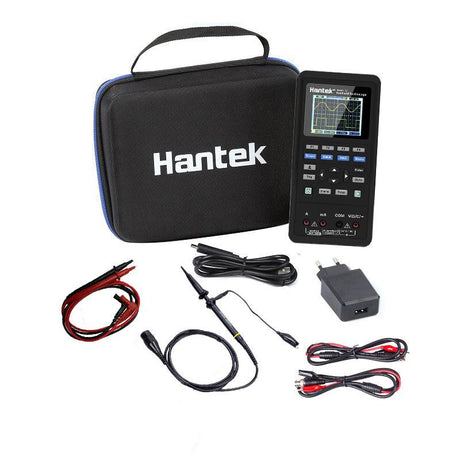
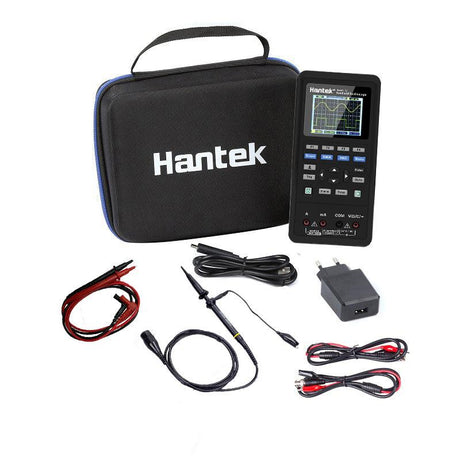
Compact handheld oscilloscopes are ideal for mobile use on vehicles – for example, in field service or breakdown assistance. These devices have an integrated battery, display, and probe connections. They are lightweight, robust, and can be operated directly in the engine compartment. Anyone looking to buy a portable oscilloscope will benefit from the flexibility of these devices.
Despite their compact design, modern handheld oscilloscopes offer a considerable bandwidth and sampling rate – perfect for quick fault analysis on the go. For workshops that work both stationary and mobile, it's advisable to look for an oscilloscope with a battery option and a robust housing when purchasing one.
USB oscilloscopes for laptop or tablet
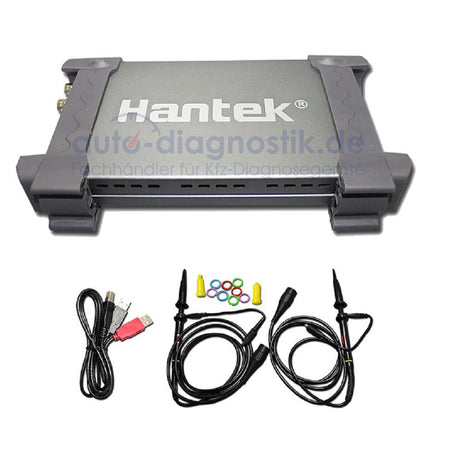
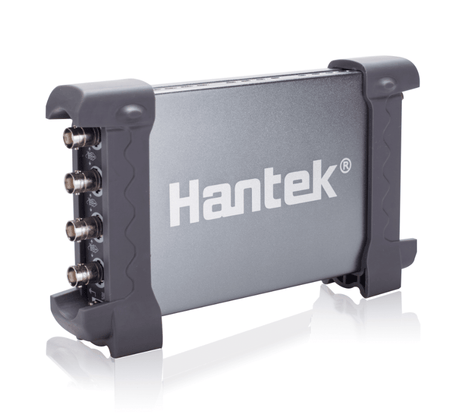
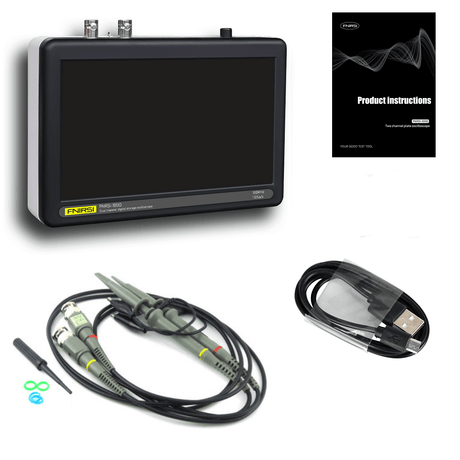
Anyone already using a laptop or tablet in their workshop can also opt for a USB oscilloscope. These devices don't have their own display; instead, they connect to the PC via USB. The measurement data is visualized using software.
USB oscilloscopes are particularly space-saving and cost-effective. They are ideal for workshops with digital infrastructure or for training purposes. For those looking to buy an affordable oscilloscope, a USB oscilloscope is often a good choice, as these devices offer excellent value for money.
Typical applications of an oscilloscope in a car
An automotive oscilloscope is used whenever conventional measuring devices reach their limits. An oscilloscope is particularly indispensable for the following tasks, which is why it's worthwhile to purchase your own.
Check ignition system
A classic application for an oscilloscope is testing the ignition voltage. Primary and secondary voltages can be precisely displayed – including combustion voltage, ignition voltage, and misfires. A faulty ignition cable or a defective ignition coil can be identified immediately. Anyone who works regularly in this area should definitely purchase an oscilloscope that supports a high bandwidth.
Sensors and actuators analyze
Sensors such as crankshaft, camshaft, ABS, or Hall effect sensors generate electrical signals that can be visualized with an oscilloscope. Actuators like fuel injectors, servo motors, or valve controls can also be tested with an oscilloscope – including their switching behavior and clock frequency. To reliably perform these tasks, it is important to ensure that the oscilloscope has sufficient channels and a high sampling rate.
Controlling CAN bus and data communication
Modern vehicles use the CAN bus for communication between control units. An oscilloscope allows for the analysis of these signals – for example, when a signal interruption, voltage drop, or interference from external voltage is suspected. LIN, FlexRay, or K-Line signals can also be visualized with an oscilloscope. Those looking to purchase an oscilloscope specifically suited for this area should look for models with advanced trigger functions.
Diagnosing charging and starting systems
The function of the alternator, battery, and starter can be comprehensively assessed using an oscilloscope. Voltage drops during the starting process or charging voltage at different engine speeds are typical test tasks. The alternator's ripple voltage can also be visualized. Therefore, it is doubly worthwhile for workshops to purchase an oscilloscope, as these measurements are often crucial for a precise diagnosis.
Automotive oscilloscope – Important technical features when buying
Anyone looking to buy an oscilloscope should be familiar with its key performance specifications to make an informed decision. Especially in the automotive sector, selecting the right model is crucial, as requirements can vary significantly depending on the vehicle, system, and diagnostic task. Buying an oscilloscope isn't just about acquiring a measuring device; it's about investing in a tool that must deliver precise and reliable results for years to come.
Key technical specifications such as bandwidth, sampling rate, number of channels, trigger functions, display, and ease of use significantly determine whether a device is suitable for automotive applications. Therefore, anyone looking to buy an oscilloscope should not only consider the price but also its long-term reliability. A high-quality automotive oscilloscope not only saves time and money in the long run but also ensures greater reliability during troubleshooting.
Workshops that regularly work with complex automotive technology should prioritize future-proof devices when purchasing an oscilloscope. Modern vehicles increasingly utilize digital signals and high-speed data transmissions, which cannot be reliably analyzed with simple or outdated equipment. Therefore, it is worthwhile to carefully compare the technical specifications before buying an oscilloscope and select the device that best suits your individual needs.
Bandwidth (MHz)
Bandwidth is one of the most important factors when buying an oscilloscope. It indicates how quickly the device can acquire electrical signals. In the automotive sector, most relevant signals operate in the 20 to 100 MHz range, which is generally perfectly adequate for analyzing ignition systems, sensors, and actuators. However, if you want to buy an oscilloscope that will also be suitable for future requirements, you should plan for some extra bandwidth and choose a model with a higher bandwidth. This ensures that you can perform precise measurements even with PWM signals, high-frequency sensors, or modern control units with fast data transmissions. Buying an oscilloscope, therefore, always means investing with foresight.
Sampling rate (MS/s)
Besides bandwidth, the sampling rate plays a crucial role. It determines how many measurement points are acquired per second. The higher the sampling rate, the finer and more accurate the signal representation. For most automotive applications, a sampling rate in the range of 10–100 MS/s is sufficient, but anyone looking to buy an oscilloscope that also operates reliably with very short signal pulses should consider devices with sampling rates in the GSa/s range. A high sampling rate is particularly important when analyzing fast signal waveforms such as CAN bus data or the control of fuel injectors. Therefore, anyone planning to buy an oscilloscope should check whether the sampling rate is suitable for their intended applications.
Number of channels
Another key factor when buying an oscilloscope is the number of channels. While a single-channel oscilloscope can perform basic measurements, at least two channels are recommended for automotive applications. This allows, for example, ignition and injection signals to be displayed simultaneously and compared directly. For more demanding analyses, such as communication between control units or parallel sensor signals, four channels are often essential. Therefore, anyone looking to buy an oscilloscope suitable for complex diagnostics should consider not only its performance but also the number of channels. More channels mean greater flexibility and more precise fault analysis.
Trigger functions
Without good trigger functions, working with an oscilloscope quickly becomes confusing. Triggers ensure that the signal is displayed stably on the screen and can be analyzed precisely. A powerful trigger system is indispensable, especially in the automotive sector, where signal waveforms are often irregular. Anyone looking to buy an oscilloscope should therefore pay close attention to whether the device supports different trigger types – such as edge triggers, pulse width triggers, or CAN bus-specific triggers. The more signal acquisition options are available, the easier it is to pinpoint a fault in the vehicle. Buying an oscilloscope, therefore, also means paying attention to the flexibility of its trigger functions.
Display and operation
An oscilloscope is only as good as its usability. Even if the technical specifications are impressive, a device is of little use if it's difficult to understand or confusing. Therefore, when buying an oscilloscope, you should definitely pay attention to a high-quality display and intuitive operation. A high-resolution color display ensures that signals are clearly visible, even with complex waveforms. Modern devices often feature integrated touchscreens or ergonomic rotary controls, which significantly simplify daily use in the workshop. If you're looking to buy an oscilloscope for long-term use, you should also check whether firmware updates or software extensions are available. This keeps the device up-to-date and allows you to easily handle future diagnostic tasks.
Advantages of an oscilloscope over a multimeter
A multimeter measures voltages, currents, and resistances – but only as static numerical values. An oscilloscope, on the other hand, displays signal waveforms over time. This dynamic representation is crucial for many automotive diagnostics.
An oscilloscope makes visible what a multimeter cannot: pulse widths, clock speeds, interference, interruptions, voltage dips, or irregular waveforms. Therefore, it is advisable to purchase an oscilloscope as soon as more complex diagnostics are performed in the automotive sector.
Automotive oscilloscope – What should be included in the package?
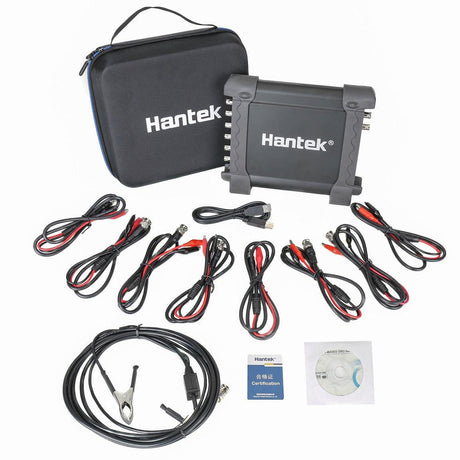
When buying an oscilloscope for cars, you should pay attention to the following accessories: test probes, ground clamps, software, power supply or battery and a transport case.
Optional accessories such as high-voltage probes or adapters for specific sensor connections can be useful depending on the application. Therefore, anyone looking to buy an oscilloscope should consider not only the device itself but also its accessories. A complete set simplifies the workflow and saves money in the long run.
Buy an oscilloscope at auto-diagnostik – Your advantages
At auto-diagnostik.de you will find a selection of high-quality oscilloscopes for the automotive sector. Among others, we carry the popular models from Hantek, which are known for their excellent value for money.
Whether you need a handheld oscilloscope, a PC-based oscilloscope, or a complete workshop kit – we have the perfect model for your needs. Customers who purchase an oscilloscope from us also benefit from expert support, fast delivery, and fair prices.
Buying an oscilloscope – what to look for?
Anyone looking to buy an oscilloscope should know exactly what to look for. Key technical specifications such as bandwidth, sampling rate, and the number of channels are crucial. Trigger functions also play a significant role, as they ensure a clean signal display. Furthermore, a modern oscilloscope should have an easy-to-read display and intuitive operation so that even complex signals can be clearly visualized. When buying an oscilloscope, it's also wise to consider its long-term usability: vehicles are constantly evolving, so it's worthwhile choosing a device with some performance headroom. This way, you can be sure that your oscilloscope will meet future diagnostic requirements.
Recommended oscilloscopes for precise automotive diagnostics
For reliable analysis of sensors, actuators, ignition signals, and communication systems, we recommend high-quality devices from the Hantek series. Both models impress with high measurement accuracy, ease of use, and excellent value for money – ideal for workshops and ambitious DIY mechanics.
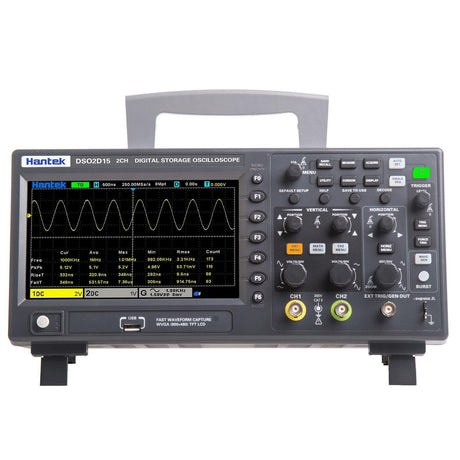
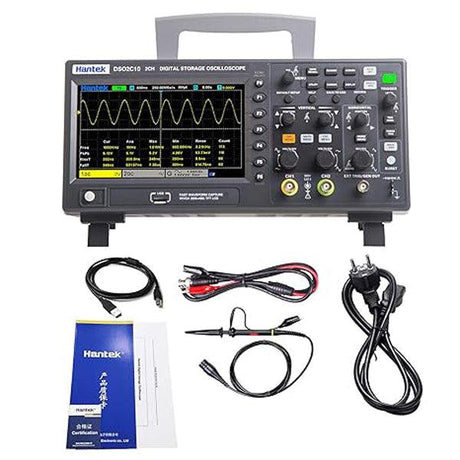
Hantek DSO2D15 – 2-Channel Digital Oscilloscope with AFG
- Bandwidth up to 150 MHz – ideal for ignition, sensor and actuator signals
- Integrated Function Generator (AFG) for testing and simulation tasks
- High sampling rate for precise signal waveforms in real time
- Perfectly suited for daily workshop use
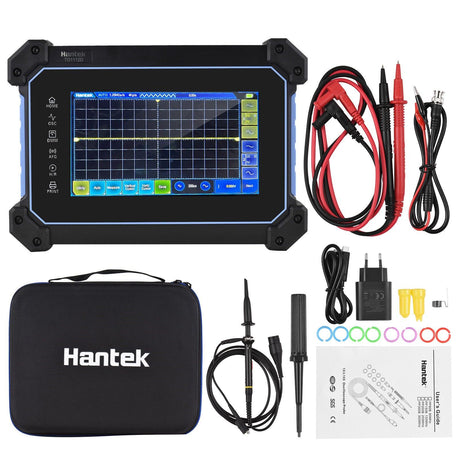
Hantek TO1112D – Touchscreen Digital Oscilloscope (2 channels, 110 MHz)
- 110 MHz bandwidth – ideal for modern vehicle systems
- Large touchscreen for intuitive, fast operation
- Stable signal view thanks to precise trigger functions
- Recommended for users who value comfort and mobility.
As well as the Hantek TO1112D and the Hantek DSO2D15 They stand for professional measurement technology in the automotive sector and offer everything required for precise and efficient diagnostics on modern vehicles.
An oscilloscope is a must for modern automotive diagnostics.
Anyone working with modern automotive technology should definitely buy an oscilloscope. It perfectly complements traditional diagnostic tools and provides deep insights into electrical signals. Whether in a professional workshop or a private garage, a good automotive oscilloscope saves time, reduces errors, and improves the quality of every repair or inspection.
At auto-diagnostik.de you'll find a wide selection of suitable devices – whether you're a professional or an ambitious DIY mechanic. Rely on proven technology, practical equipment, and expert advice – for precise and future-proof vehicle diagnostics.